Assistive robotics / Early research
Everyday actions.
Extraordinary meaning.
A cup within reach. A light you can adjust. Small moments of control can make a world of difference. We're exploring practical robotics built around those moments.
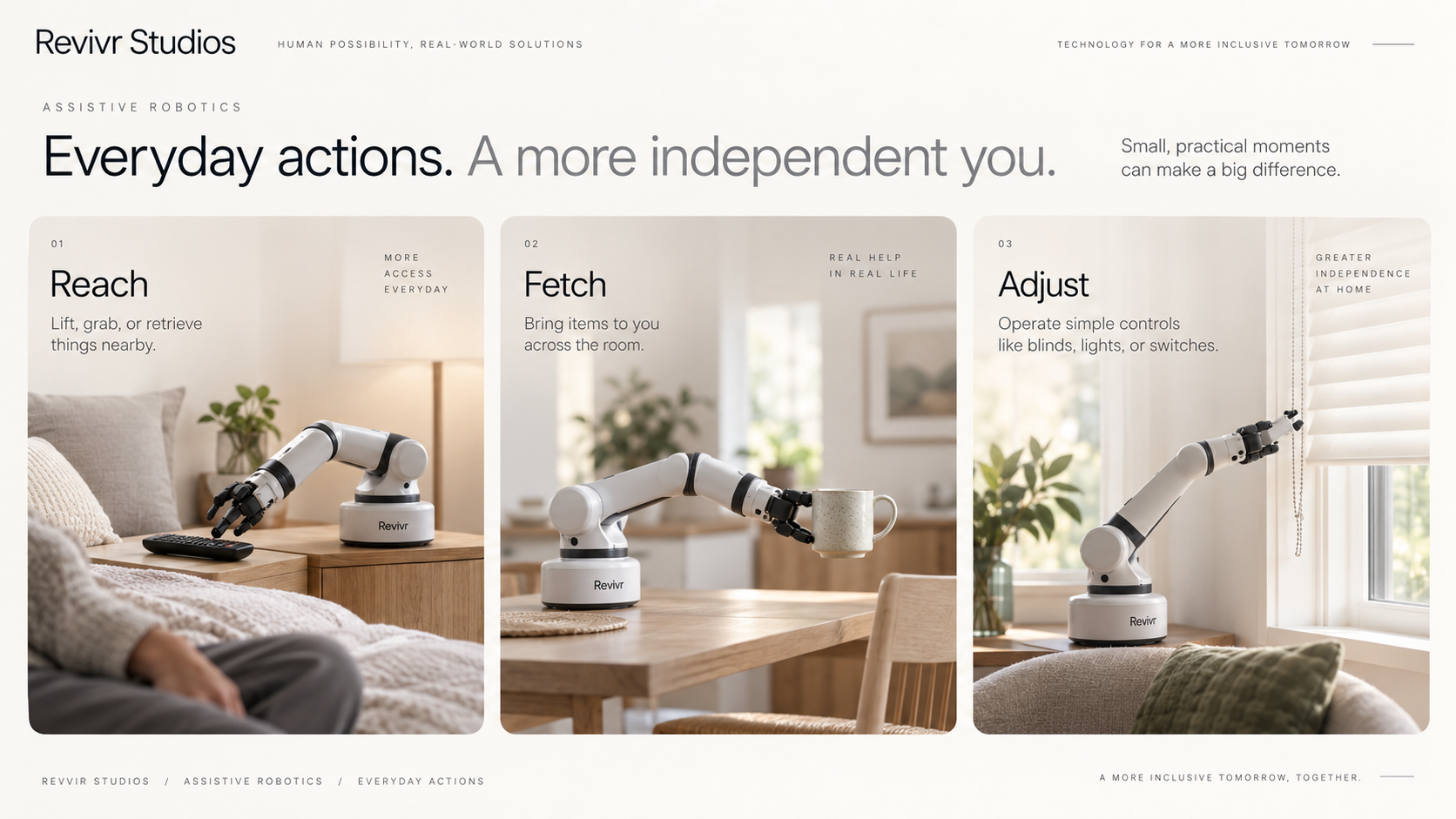
Concept imagery illustrating our research direction.
From intention to independence
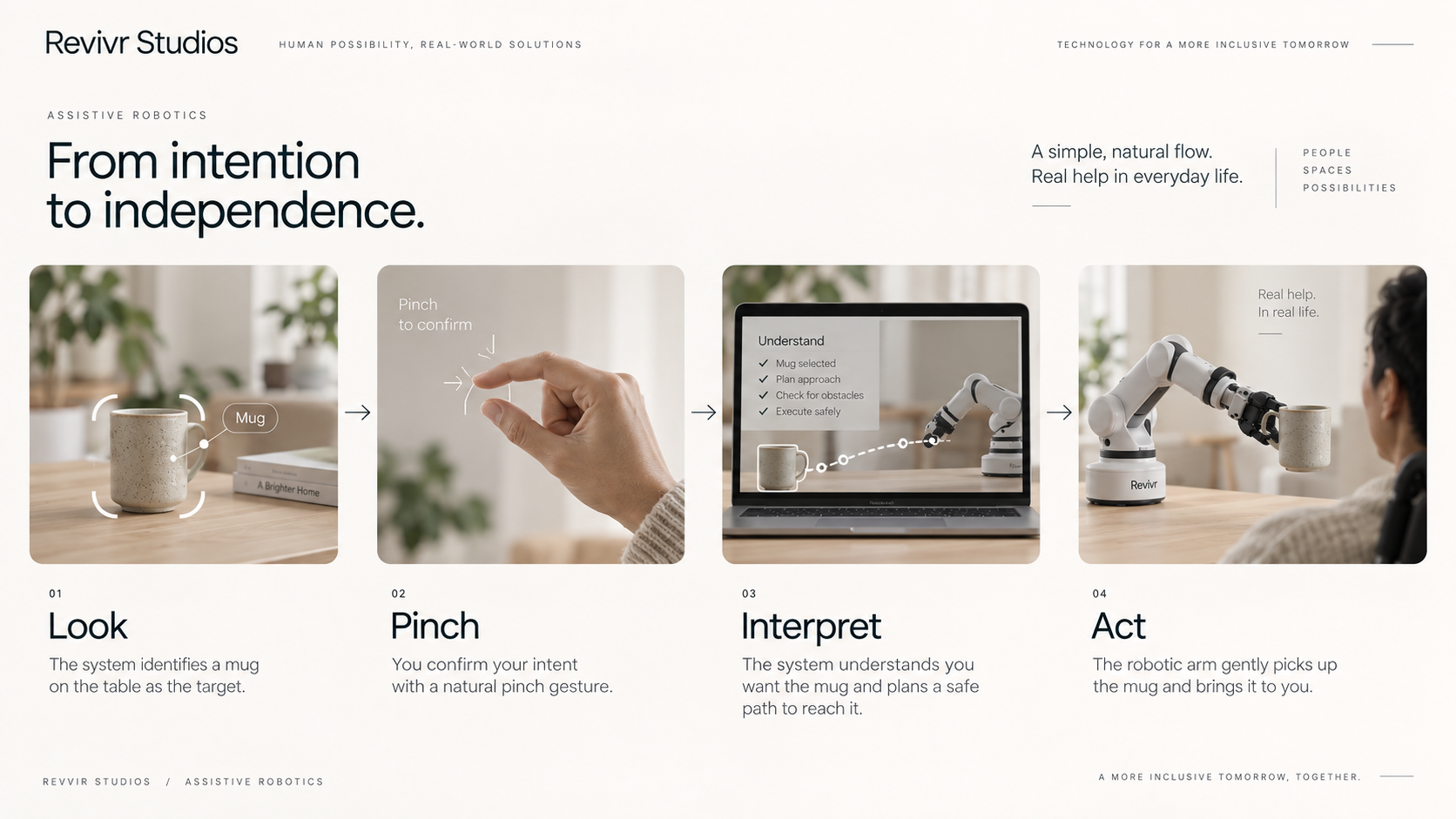
Look. Confirm.
Let technology help.
We're investigating how spatial interfaces can connect a person's intent to a simple robotic device. The goal: natural interaction that leads to useful help in the physical world.
Start with the person.
The task matters because of the person who needs to do it. Their abilities, environment, and preferences guide the work.
Keep the action clear.
A deliberate confirmation connects intention to action, with understandable feedback along the way.
Build around daily life.
Our early prototypes use off-the-shelf robotics to investigate modest, practical tasks.
A clear path
from intent to action.
Look, select, interpret, act. Each step needs to be understandable before a machine moves. This is the interaction model guiding our early bench work.
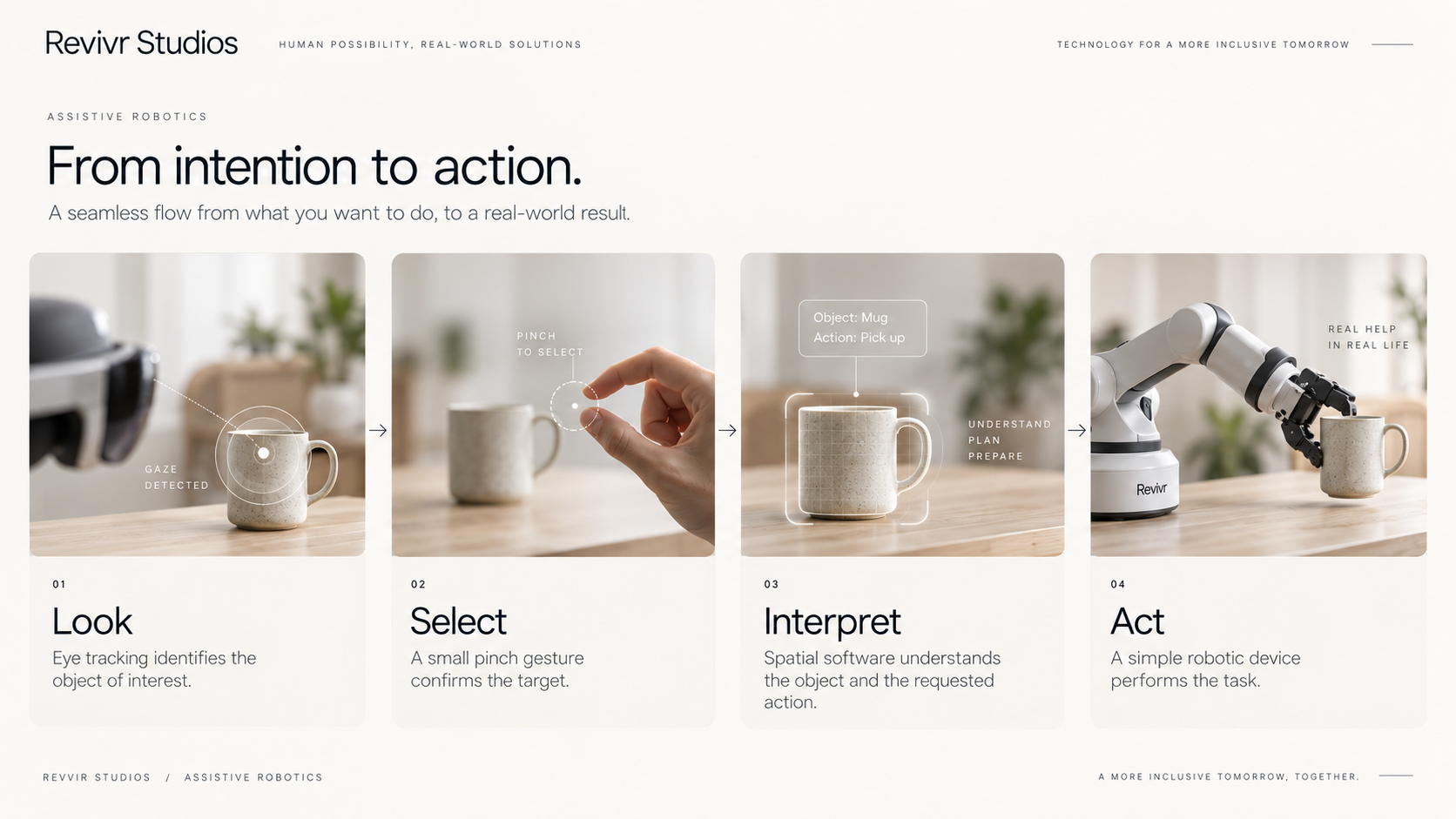
Illustrative concept. These capabilities are being explored in early research and are not offered as a finished assistive product.
The next step
starts together.
We're looking for clinicians, occupational therapists, researchers, and families to help shape what gets built first. Your experience can help us ask better questions and focus on tasks that matter.
Let's talk
Help shape everyday independence.
Bring your perspective to our early assistive robotics work.
Start a conversation